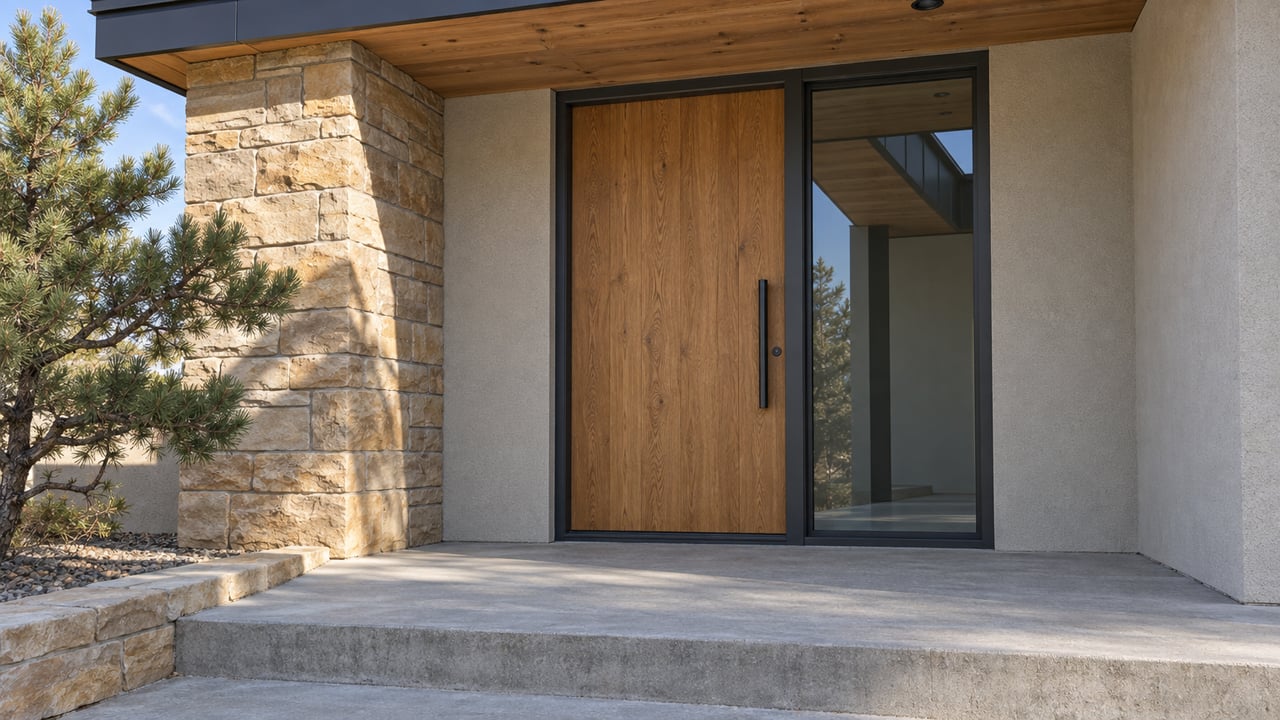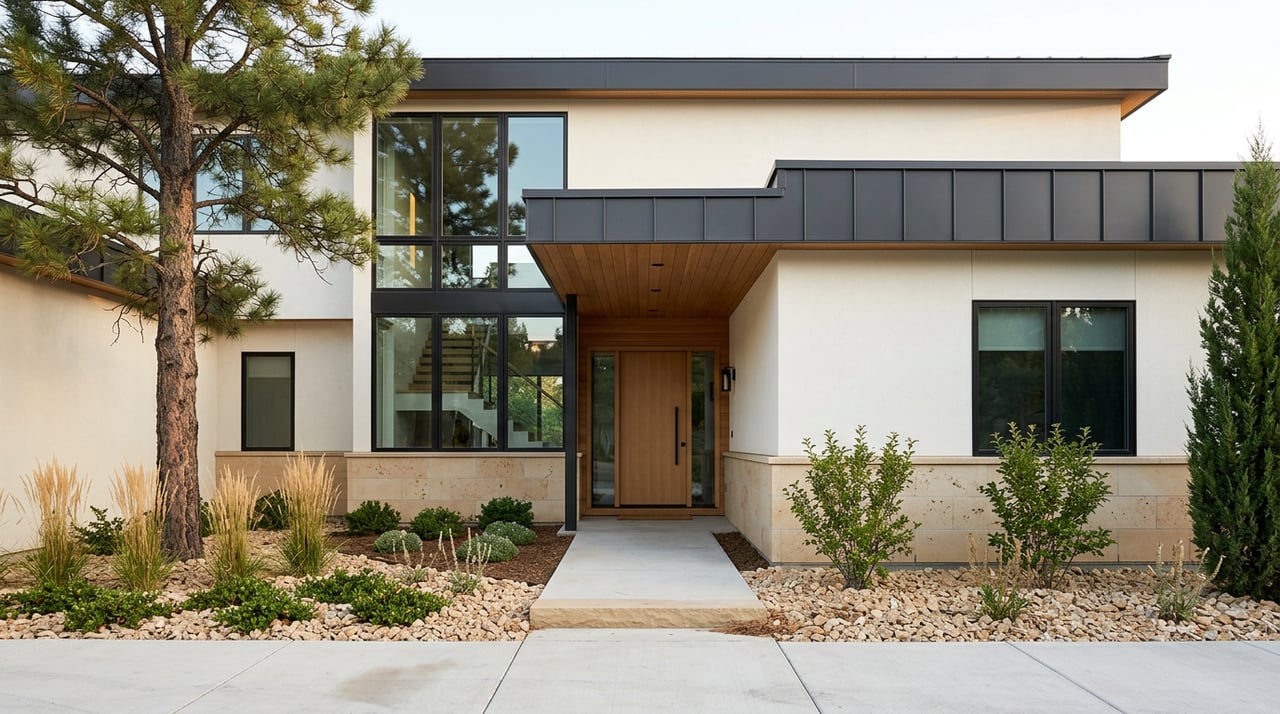
Pull up any Louisville search on a portal and the per-square-foot numbers refuse to settle. One two-story sits at $383. A block away, a new build asks $600. A third, remodeled after smoke damage, lands near $450. The temptation is to average them. Do not average them. Louisville is running two housing markets on the same street grid, and the gap between them is the single most important thing a buyer or seller in this town should understand before writing an offer.
The thesis, stated plainly
The Marshall Fire destroyed more than 1,000 homes across Louisville and Superior in December 2021. Roughly 70% of Louisville homes have since been rebuilt, and the finished product is not priced like the surviving stock next door. New construction on burned lots is trading at roughly $600 per square foot. Homes that survived and were remodeled are closer to $450. That $150 per foot is not a marketing spread. It reflects a code delta, an insurance delta, and a set of transaction frictions that only surface once a contract is on the table.
If you are shopping Louisville right now, the useful question is not "what does this neighborhood cost." It is "which tier is this listing, and what does that mean for my offer, my lender, and my carrying cost."
Tier one and tier two, side by side
| Attribute | Post-fire rebuild | Surviving home, remodeled |
|---|---|---|
| Typical sale range | ~$600/sq ft | ~$450/sq ft |
| Build code | Current Boulder County code | Grandfathered under older code for owners who stayed |
| Fire sprinklers | Frequently included in new plans | Often absent |
| Energy envelope | Current standards | Pre-2022 standards |
| Insurance history | Fresh policy on a new structure | Carries claim history from the fire event |
| Floodplain exposure | Same as parcel | Same as parcel |
The rebuild premium is not aesthetic. It is a bundle of hard construction economics. Rebuild costs across the Superior and Louisville burn area have landed at $650,000 to $1.1 million for a standard 2,000 to 3,000 square foot home, roughly a 30% to 50% premium over pre-fire Boulder County construction because of concentrated labor demand and the pricing of fire-resistant materials. Sellers who rebuilt with full replacement cost coverage are the ones capturing $200,000 to $400,000 in equity at current new-build market values. That equity is what a buyer is paying for at $600 a foot.
The friction that catches buyers off guard
Three items rarely appear in the listing description and consistently move deals.
Coal Creek and Zone AE. Portions of the Marshall Fire burn area sit inside the Coal Creek Zone AE floodplain. Any lender-financed construction or purchase inside that zone will require federally backed flood insurance, typically $1,500 to $4,000 per year through the NFIP or a private carrier. That is a permanent line item on the carrying cost of the home, and it is why buyers are advised to pull a FEMA flood zone determination and, where applicable, an elevation certificate before going hard on earnest money. Elevation above base flood elevation can materially reduce the premium, which means two nominally identical homes on the same block can carry very different annual costs.
Retaining walls. A recurring surprise in Louisville rebuilds has been the discovery that individual homeowners, not the HOA or the city, own the retaining walls on their parcels, sometimes shared with a neighbor. Replacement estimates in the burn area have run around $300,000 per wall. Bartley Cox, a longtime Louisville homeowner interviewed by ColoradoBiz, described this as one of the least-anticipated line items of the rebuild process. For a buyer, the question to ask on any lot-adjacent purchase is simple: who owns the wall, when was it last inspected, and does the seller's disclosure address it.
The insurance shortfall carryover. According to the Colorado Division of Insurance, at least two-thirds of Marshall Fire households were underinsured, with the average shortfall exceeding $100,000. Only 76 of 951 total-loss claims from 2022 carried guaranteed replacement coverage. That number matters to a buyer because it shaped the rebuild pipeline: the homes now hitting the market as finished rebuilds were often completed by owners who absorbed a personal capital gap, and the ones that stayed as vacant lots for sale typically belonged to owners who could not close that gap. The stock available today is a filtered set, not a random one.
The lot market is its own thing
Vacant, remediated lots inside the burn area have been transacting in a $250,000 to $450,000 band, mostly to cash buyers, mostly to custom home builders and owner-builders. Compared with non-fire Boulder County lots of similar size, these lots have traded at a 15% to 25% discount. That discount is not a "deal." It is a spread that pays the buyer for carrying cost, execution risk, and an 18 to 36 month construction window. Anyone underwriting a lot purchase in Louisville should model those months of parallel housing cost and factor a realistic hard-cost bid, not an early feasibility number.
The lot pipeline is also being reshaped by policy. In February 2026, Community Foundation Boulder County announced that the final $6 million from the Boulder County Wildfire Fund will fund three affordable housing projects that prioritize fire survivors: an Impact Development Fund infill program on eight lots in Superior, Pennrose's Kite Route Crossing, a 50-unit senior community at 2101 Old Rail Way in Superior slated for completion in 2027, and a Flatirons Habitat for Humanity build in Louisville using the BoulderMOD modular-home factory. Foundation staff later clarified that the Louisville Habitat project will prioritize Marshall Fire survivors but is not inside the formal burn area. For buyers, the practical read is that a slice of Louisville's remaining lot inventory is being pulled into deed-restricted, income-qualified use rather than open-market resale.
What the current market data actually says
Louisville's headline numbers hide the tier split. Redfin recorded a February 2026 median sale price of $841,000, up 9.2% year over year, with 57 days on market versus 85 a year earlier and 20 closings on the month. By June 2026, Movoto put the median list price at $870,000 with 40 days on market. Read those without the rebuild context and it looks like a warming, undifferentiated market. Read them with the rebuild context and something more interesting appears: the closings and inventory are increasingly weighted toward finished rebuilds, and the days-on-market compression sits inside a market where two distinct products are priced very differently on the same block.
The interpretive move for a buyer: do not use the town-wide median as a proxy for value. Ask for comps segmented by construction year post-2022 versus pre-2022. Ask whether the parcel touches Zone AE. Ask whether the retaining wall is on-parcel and, if so, its condition. Those three questions do more to explain a Louisville price than any city-level statistic.
The interpretive move for a seller: if your home is a completed rebuild, the comp set that matters is other post-fire rebuilds, not the pre-2022 stock a lender's appraiser may reach for. If your home survived and was remodeled, the buyer pool most likely to pay for it is one that values mature landscaping, established grade, and the absence of a construction premium, and your marketing should say so.
FAQ
Are Marshall Fire rebuilds harder to insure? Rebuilds carry a fresh structure and, in many cases, modern fire-resistant materials, which insurers generally favor. Where insurance friction shows up in Louisville is on the floodplain overlay in Coal Creek Zone AE, not on the rebuild itself. Ask any prospective carrier for a bindable quote before removing the loan and appraisal conditions on your contract.
Does buying a rebuilt home carry any residual claim history? The structure is new, but the parcel and prior policy history are not. A buyer's own underwriter will price the policy off the new build, but it is still worth pulling a CLUE report and asking the seller for the certificate of occupancy and the final permit sign-off.
Where can I confirm floodplain status for a specific address? Start with the FEMA Flood Map Service Center at msc.fema.gov and cross-check against the City of Louisville's parcel information. If the parcel touches Zone AE, order an elevation certificate before you go under contract, not after.
Work with someone who reads the split, not the average
Louisville's post-fire market rewards precision. Two homes on the same street can carry six figures of difference in cost basis, insurance profile, and future capex, and none of that shows up in a portal median. If you are buying or selling in Louisville and want an offer or a listing strategy built on the tier the property actually belongs to, Sara Vaughn at LIV Sotheby's International Realty is available to schedule a personalized market consultation.